Wize Owl Original · news
SAA's salary delays show how tight the airline's finances remain
South African Airways has again adjusted its salary payment timetable, with some staff facing a short delay in October after a similar disruption in September. Newsroom Z
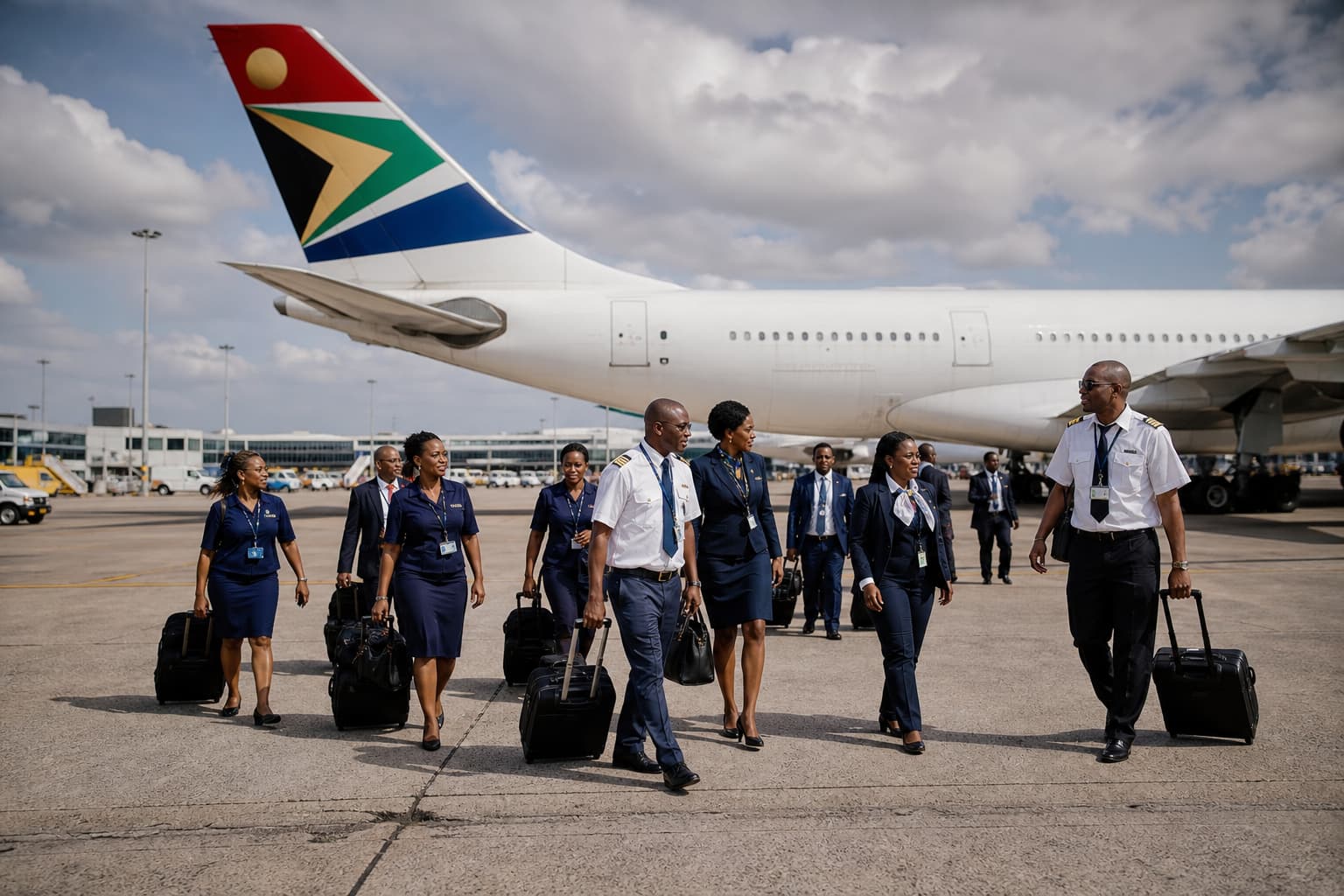
South African Airways is again under the spotlight for how it pays its staff. According to Newsroom ZA, the airline told employees that October salaries would not follow the usual pattern, marking the second consecutive month in which payment timing had to be adjusted. The issue matters because salary delays at a state-owned airline are not just an internal payroll problem. They signal the strain the business is under while it tries to stay operational.
The original internal communication, reported by TimesLIVE and attributed to acting chief human capital officer Lourens Erasmus, said salaries would be staggered between 27 and 31 October instead of being paid on the 25th as usual. Ground staff and cabin crew were meant to be paid on 27 October, pilots on 28 October, management and specialists on 30 October, and executives on 31 October. SAA later clarified that most employees would in fact be paid on 27 October, which is their normal payday, while those paid later would see only a delay of a day or two.
This came after a similar disruption in September, when salaries were reportedly paid around 2 October. Taken together, the two months show a business that is still managing uneven cash flow. In simple terms, that means the airline does not appear to be moving money through the business smoothly enough to keep every payment date unchanged, even for its own workforce.
SAA has pointed to higher operating costs as part of the reason. In comments published by TimesLIVE, spokesperson Mphilo Dlamini said the airline recognises the importance of paying staff on time and acknowledged the pressure on the business. Dlamini said geopolitical developments were contributing to higher costs, especially fuel, which is putting more strain on the airline’s liquidity. Liquidity refers to how easily a business can access cash when it needs to pay immediate bills and obligations.
The airline says management has been speaking to employees about the steps being taken to protect the sustainability of the business and its ability to continue operating. That language matters because it suggests the focus is not only on this month’s pay run, but on whether the airline can keep balancing costs, borrowing, and day-to-day operations without slipping further.
At the same time, the state’s financial exposure to SAA remains significant. National Treasury has confirmed that government support is still tied to the airline through several guarantees. As previously reported by Newsroom ZA, the government provided a R1 billion guarantee in October 2026 to support SAA’s immediate working capital needs after a global jet fuel price shock. Treasury’s Medium-Term Budget Policy Statement also shows roughly R223 million in additional government guarantees related to unflown-ticket liabilities and corporate letters of credit.
Those figures add up to about R1.223 billion in identified government-backed exposure, although the guarantees cover different obligations and are not the same as handing over cash to the airline. In practical terms, a guarantee means the state stands behind borrowing if the airline cannot meet the debt covered by that arrangement. It is support, but it is also risk for the public purse.
Treasury’s director-general, Duncan Pieterse, has said further assistance for SAA cannot be ruled out. Treasury is working with the Department of Transport on a process to identify a strategic equity partner for the airline, and Pieterse said the fiscal effects will become clearer once the transaction advisory work is finished. That points to a bigger long-term question: how to reduce the state’s exposure while keeping the airline going.
Newsroom ZA also notes that SAA has already received about R50 billion in government bailouts over the years. That history explains why the search for an equity partner remains so important. The airline is still trying to operate in a difficult environment where rising costs and weak liquidity are colliding with expectations that it should remain stable, pay staff on time, and rely less on repeated state support.
Why it matters for South Africans
For South Africans, this story goes beyond one airline’s payroll calendar. SAA is still a state-owned company, so its cash pressure can affect workers, travellers, and the public finances that ultimately back the airline through government guarantees. When salaries are delayed, it suggests operational strain. When Treasury confirms more than R1.2 billion in guarantees, it shows that the risk is still being carried partly by the state. That makes SAA’s financial stability a broader issue, not only a company problem.
What happens next
The immediate question is whether SAA keeps to the revised October payment plan without further disruption. Beyond that, Treasury and the Department of Transport will continue work on identifying a strategic equity partner. The outcome of that process should help clarify whether the airline can reduce its reliance on government-backed support and how much additional assistance, if any, may still be needed.
Written with AI assistance and human-edited by the Wize Owl desk, based on the credited reporting below.