Wize Owl Original · business
South Africa’s airports are nearly back to pre-Covid passenger levels, but the flight count tells a different story
Airports Company South Africa’s latest year shows a recovery built on fuller planes, stronger regional and international traffic, and a domestic market that has changed a
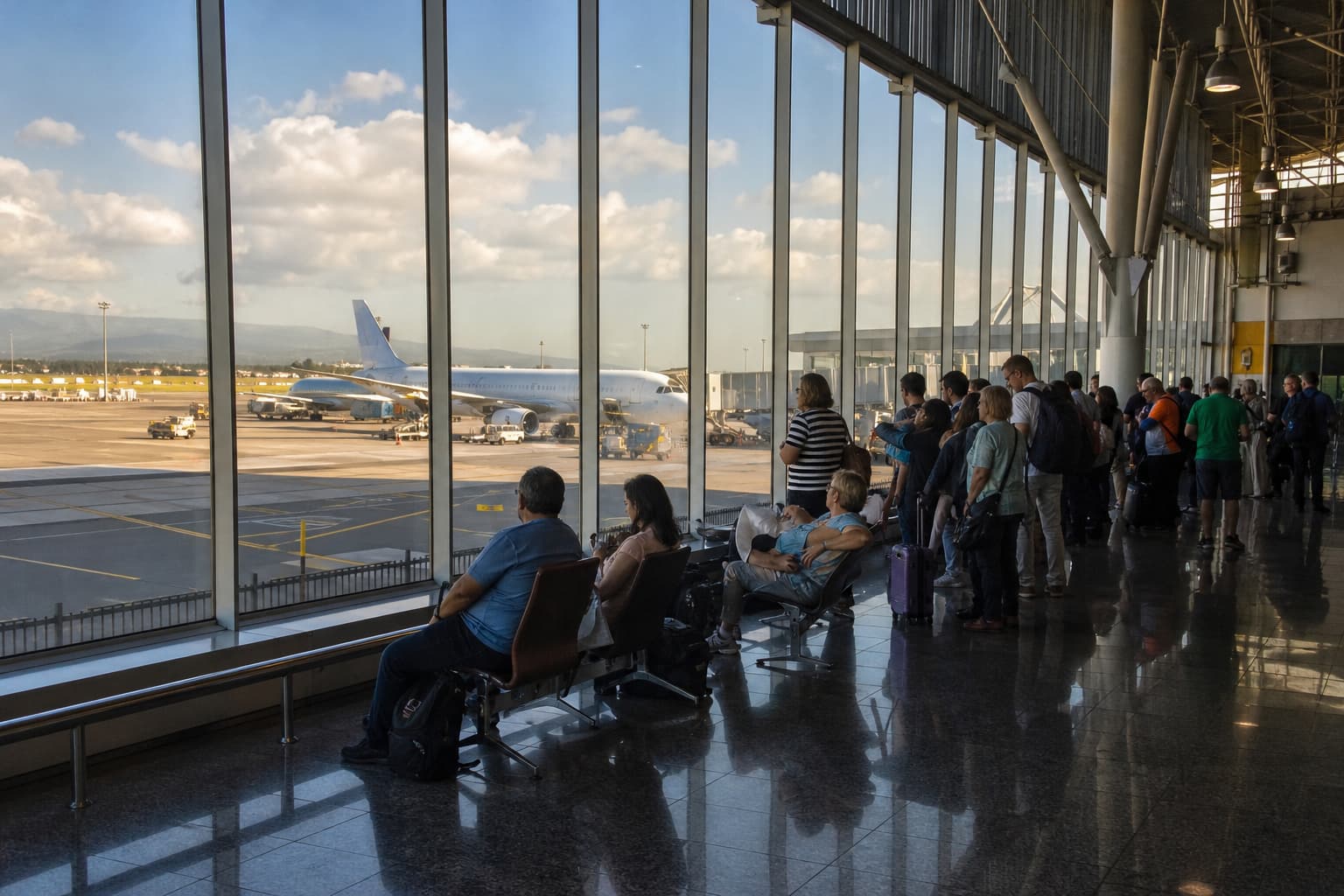
South Africa’s airport network is back to carrying almost the same number of passengers it did before the pandemic, even though it is still operating fewer flights than it used to. That is the main picture from Airports Company South Africa, which Newsroom ZA reports handled 20.58 million departing passengers across its network in the financial year ended 31 March 2026.
That passenger total was 8.5% higher than the previous year and equal to 98% of pre-Covid levels. In other words, the network has nearly recovered its old volume of travellers. But the rebound has not happened in the same way across every part of aviation. The number of aircraft movements at ACSA-operated airports reached only about 93% of pre-pandemic levels.
This gap matters because it shows recovery is being driven less by more take-offs and landings, and more by how airlines are using the flights they already have. Newsroom ZA says the pattern points to higher aircraft utilisation and fuller planes. Put simply, more passengers are being carried on fewer individual flights.
The strongest recovery has come from the regional and international sides of the market. Regional passenger traffic reached 104% of 2019 levels, while international traffic returned to 100%. Domestic traffic, while still healthy, lagged slightly behind at 97%. That balance helps explain why passenger numbers are almost back to normal even though the movement of aircraft has not fully caught up.
The domestic market has changed a great deal since 2019. Newsroom ZA notes the loss of major operators such as Comair and Mango, together with the reduction in South African Airways operations compared with before the pandemic. In that smaller field, FlySafair and Airlink expanded their presence after the departure of the big low-cost carriers. The result is a market with fewer operators, but one where airlines can carry more passengers per flight.
That shift is important context for reading the airport numbers. A network can move close to its old passenger volume without needing the same number of aircraft movements if the flights are fuller and capacity is used more efficiently. The article also says changes in airline market share and the way passengers move through the country’s major airports have contributed to the trend.
Cape Town International Airport has become an increasingly important international gateway in this recovery, with both international and regional growth helping lift ACSA’s network. O.R. Tambo, meanwhile, remains South Africa’s main gateway for both international and domestic travel. Together, the two airports anchor the recovery story that ACSA is now telling through its passenger figures.
The numbers are not only operationally significant, they are financially strong as well. Newsroom ZA reports that ACSA posted a R1.2 billion net profit and R8.8 billion in revenue for the 2025/26 financial year. That puts the state-owned company among the better-performing SOEs at a time when the wider sector is still associated with governance failures, financial mismanagement and corruption concerns.
The recovery also creates a practical challenge. ACSA must keep absorbing growth while maintaining day-to-day operations and investing in infrastructure. To prepare for continued expansion, the company has allocated R21.7 billion to infrastructure projects from 2027 through to 2032. Those plans include upgrades at OR Tambo and Cape Town International, as well as developments at George, Chief Dawid Stuurman and King Phalo airports.
Taken together, the figures show an aviation sector that is not simply returning to old habits. Passenger volumes are nearly back where they were, but they are being carried through a leaner flight network. For travellers, that points to a system that is making better use of capacity. For ACSA, it means the next phase is less about recovery and more about keeping pace with demand while expanding the airports that carry it.
Why it matters for South Africans
Airports Company South Africa’s latest year shows a recovery built on fuller planes, stronger regional and international traffic, and a domestic market that has changed a
What happens next
Wize Owl will follow the credited reporting and update this explainer when verified new information becomes available.
Written with AI assistance and human-edited by the Wize Owl desk, based on the credited reporting below.